Tax Planning

California has the highest state income tax rate in the country. If you earn over $1 million, your top marginal rate is 13.3%. Even at $400,000, you’re paying 11.3% before you pay the IRS its share. For high-income professionals in San Diego, taxes are likely your single largest expense. Not your mortgage or your lifestyle. Taxes.

We understand the relationship between your income, your portfolio, and your taxes, especially during retirement when you begin your portfolio distribution strategy. Bull Oak builds out a tax strategy directly into your financial plan.

How Bull Oak Handles Tax Planning

The years around retirement are your best opportunity to lower your taxes. Once your paycheck stops, you have more say over your income than you ever will again. That window doesn’t stay open long, which is why the planning needs to start early.

Most of it comes down to a few decisions: when to claim Social Security, whether to convert to a Roth, and which accounts to spend down first. These add up to real money over a 30-year retirement, and they are easy to get wrong without a plan.

We build your tax strategy into your financial plan from the start. We look at your taxable, IRA, and Roth accounts together and find the withdrawal order that costs you the least over time. We also plan around the things that trip retirees up: required minimum distributions, the tax on your Social Security, Medicare surcharges, and capital gains.

Most tax help arrives after the year ends, when nothing can be changed. Our work happens before that. We plan ahead, review it every year, and adjust when the rules or your life change. Once the strategy is set, we can coordinate with your CPA so your return reflects it. We also keep your estate plan in view, since passing money on well is part of the same job.

What Tax Planning Looks Like at Bull Oak

Roth Conversion Strategy

The Roth IRA is the ideal retirement account. Contributions grow tax-free. Qualified withdrawals in retirement are 100% tax-free. There are no Required Minimum Distributions during your lifetime. And you can pull contributions out penalty-free at any time.

The problem is getting money in. Income limits and phase-out ranges block most high earners from contributing directly. And even when a path exists, the upfront tax cost makes people hesitate.

That is where Roth conversions come in. A Roth conversion moves funds from a Traditional IRA into a Roth. You pay tax on the converted amount now, but everything grows and comes out tax-free from that point forward.

The timing and the amount matter. We model conversion scenarios based on your current income, projected retirement income, and future tax bracket assumptions. The goal is to fill lower brackets strategically, especially in years where your income dips: between jobs, early retirement, sabbatical, or a down year in variable compensation. Done well over multiple years, a Roth conversion strategy can save six figures in lifetime taxes.

Year-Round Tax Strategy

We do not wait until April. Tax planning decisions are part of our Fall Planning Meetings and every major financial decision you make. Moving jobs? Exercising stock options? Selling a rental property? Retiring early? Tax planning is a part of almost every aspect of the overall financial planning process.

Tax-Loss Harvesting

During market declines, we can identify opportunities to sell positions at a loss (intentionally). Those realized losses can offset gains in your portfolio or other outside gains you may have. If you don’t have any gains that need offsetting that year, we can use this loss as a carry forward indefinitely. This is not something a typical CPA handles, as it requires real-time investment management.

Charitable Giving Strategy

For clients who give to charity, there are smarter ways to do it than writing a check. Donating appreciated stock avoids capital gains entirely. Bunching donations into a Donor-Advised Fund in a high-income year can exceed the standard deduction threshold and produce larger tax savings.

Equity Compensation Tax Planning

RSUs, ISOs, NSOs, and deferred compensation each come with distinct tax consequences. We work with clients who receive equity comp to model exercise timing, holding periods, and diversification strategies that minimize tax drag. This is one of the most common planning needs we see in San Diego, given the concentration of tech and biotech professionals here.

California Tax Realities for High Earners

Living and working in California comes with a unique tax burden. Here is what high-income San Diego residents are dealing with.

  • State income tax up to 13.3%: California has nine income tax brackets. The top marginal rate is 12.3%, plus an additional 1% Mental Health Services Tax on income over $1 million. That is the highest in the nation.
  • Capital gains taxed as ordinary income: Unlike the federal system, California does not offer a reduced rate for long-term capital gains. Every dollar of gain is taxed at your marginal rate. If you are selling concentrated stock, exercising options, or realizing gains in a taxable account, this matters.
  • No state tax on Social Security: California does not tax Social Security benefits. This is one of the few tax advantages the state offers retirees.
  • Full taxation of retirement income: Distributions from 401(k)s, IRAs, and pensions are fully taxable at California’s ordinary income rates. There is no exclusion, no reduced rate, and no special treatment. Roth accounts become especially valuable in this context.
  • $10,000 SALT cap: Federal deductions for state and local taxes remain capped at $10,000 for most filers. For California residents paying tens of thousands in state income tax, much of that is not deductible. This makes proactive planning to reduce state-level taxable income even more important.

These are not abstract policy issues. They directly affect your financial well-being. They impact every investment gain and every retirement withdrawal. We believe having a sound tax plan is essential for every Californian seeking financial freedom.

Bull Oak New Office

Who We Work With

We work best with near retirees and current retirees looking to delegate their ongoing financial planning and investing needs. You’ve achieved great things and are too busy to manage the complexity of your finances. You also understand the benefit of an experienced human advisor.

Most importantly, genuinely nice people. We value kindness and mutual respect.

Frequently Asked Questions

What does tax planning cost at Bull Oak?

Tax strategy is included in your Bull Oak fee. There is no separate line item. Please visit Our Process page for our current fee schedule.

When should I start tax planning?

Now. The most impactful tax strategies require time. Roth conversions are best done over multiple years. Tax-loss harvesting requires catching market dips as they happen. Charitable giving strategies work best when planned before December, not in a rush. If you wait until tax season, you have already missed most of the opportunities.

Is tax planning only useful for people with complicated taxes?

If you earn over $500,000, own investments outside retirement accounts, receive equity compensation, or are within 10 years of retirement, your taxes are more complicated than you think. Even a single well-timed Roth conversion or a disciplined tax-loss harvesting strategy can save tens of thousands of dollars over time.

What is the difference between tax planning and tax preparation?

Tax preparation deals with the year that just ended. Your preparer takes your income and deductions and files the return. Planning happens before that. We look at the years ahead and find ways to lower what you owe over time, so by the time the return is filed, the decisions that matter are already made.

Will tax planning lower my taxes this year?

Perhaps, though we plan around your lifetime tax bill, not a single return. In some years it makes sense to pay a little more now to avoid paying a lot more later, like when we run a Roth conversion. The goal is the smallest total tax across your retirement.

What can tax planning actually do for me in retirement?

Quite a bit. When you claim Social Security, whether you convert part of your IRA to a Roth before required distributions begin, which accounts you draw down first. These choices add up over a long retirement. The point is to lower what you pay across all of those years, not just the next one.

What happens to my plan when the tax rules change?

Tax law shifts often, and so does your life. We review your plan every year and adjust for new rules, new income, and anything that changed since we last met. A plan you set once and never revisit is not much of a plan.

See if we're a good fit.

The
R.E.A.D.Y.
Method

Free PDF
READY Method iPad Mockup

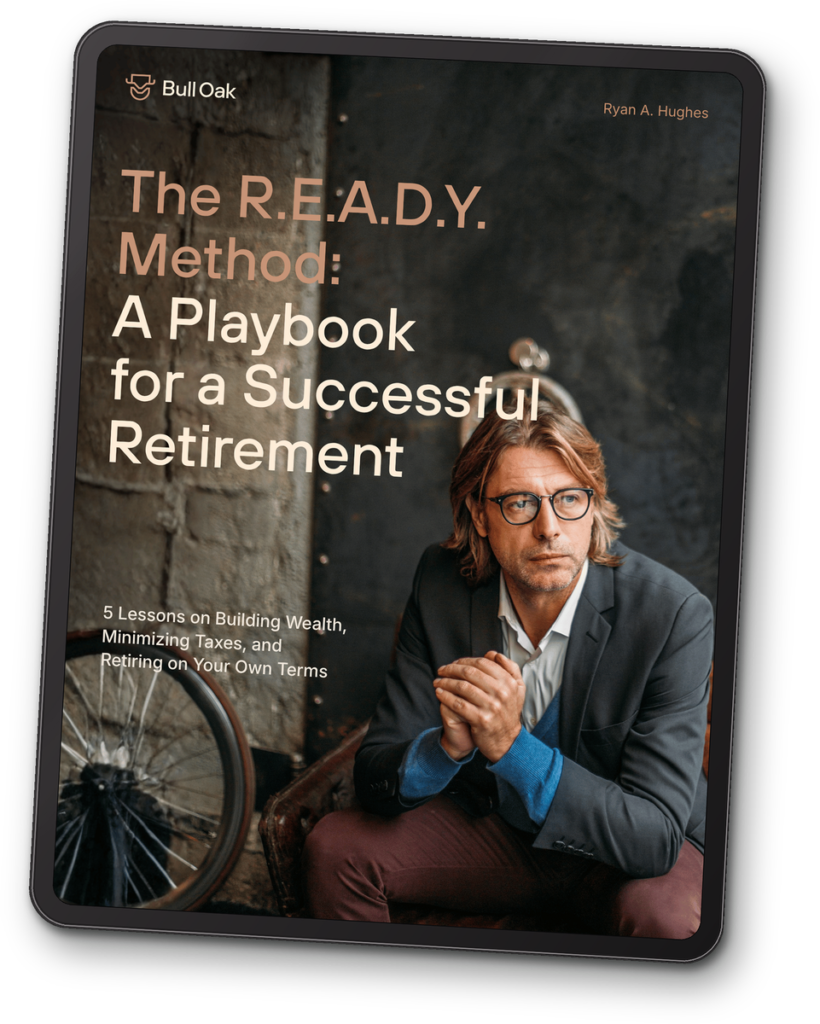
Are you retirement ready? Download our free 5-step guide on building wealth, lowering taxes, and retiring on your own terms.